
DGP. Research
Good programs start with good data. DGP. Research studies where menstrual health support is missing, so schools, health systems and lawmakers can act on what people actually need.
Menstrual health affects how people learn, work and take part in their communities, yet it’s rarely measured. DGP. Research fills that gap. Our work looks at how schools support students through their periods, how period poverty affects college students and what families say they need. We turn those findings into practical programs and clear recommendations for the people who can make change.

Our Research
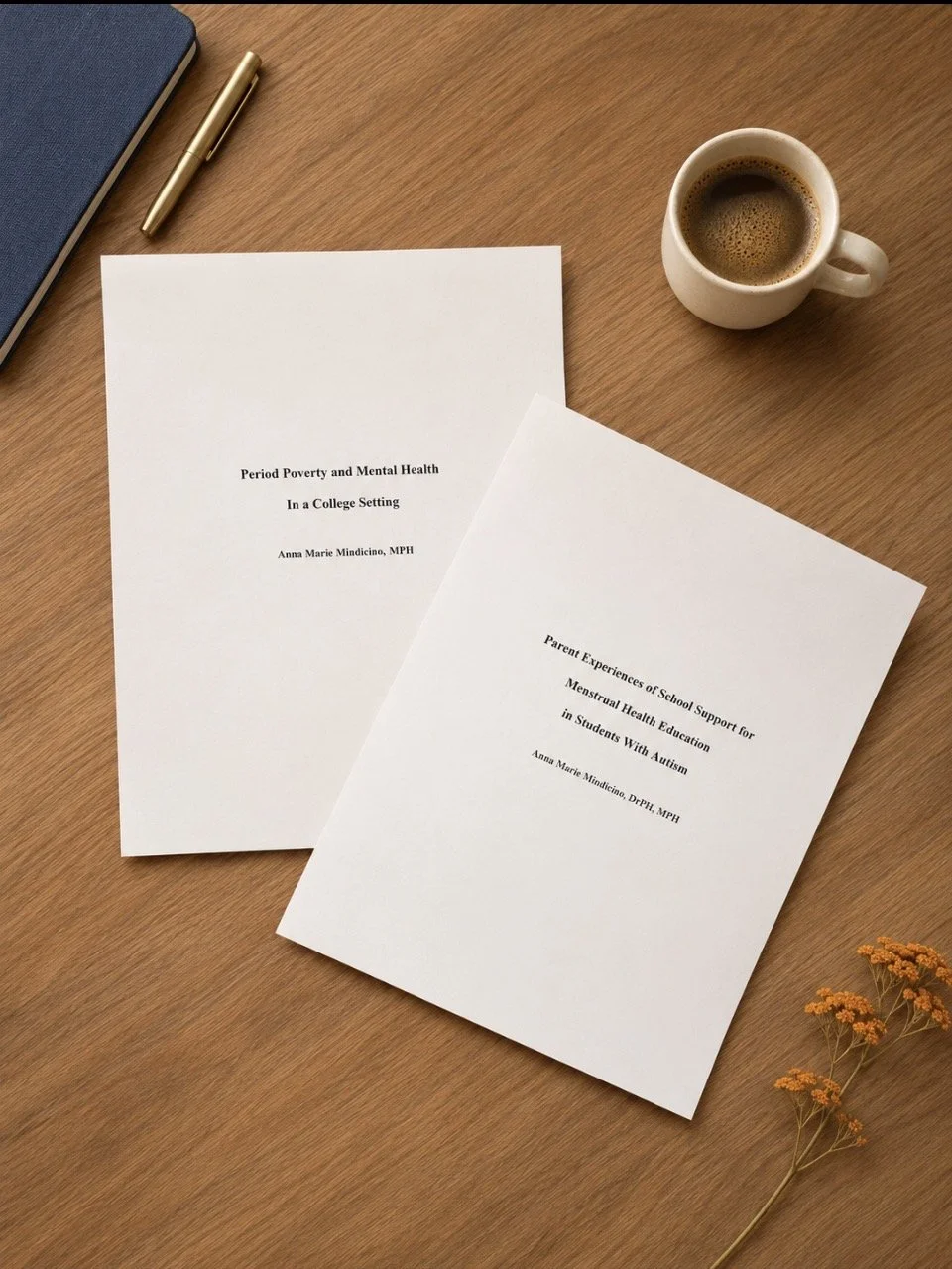
DGP.’s founder interviewed parents of autistic students about how schools support their children through their periods. The study identified 10 key themes, including how sensory differences shape a child’s experience, how much of the caregiving falls on parents, and the absence of any trusted, autism-informed menstrual health resource.
As one parent put it, “There's a million books, but there's not really a book. You could think there's books out there, but really, you're just living through it and having to learn as you go.”
The findings led to a policy brief calling for an autism-informed menstrual health curriculum.
Parent Experiences of School Support for Menstrual Health Education in Students with Autism
Period Poverty and Mental Health in a College Setting
In a survey of 42 students at a small liberal arts college, nearly half (48%) had experienced period poverty in the past year, and about 1 in 8 (12%) faced it every month. Among students who experienced period poverty, nearly 3 in 4 (71%) reported low to moderate depression symptoms.
The takeaway: period poverty is a real issue on college campuses, and it’s linked to students’ mental health. Free period products can help break the cycle, supporting attendance, grades, graduation and long-term opportunity.